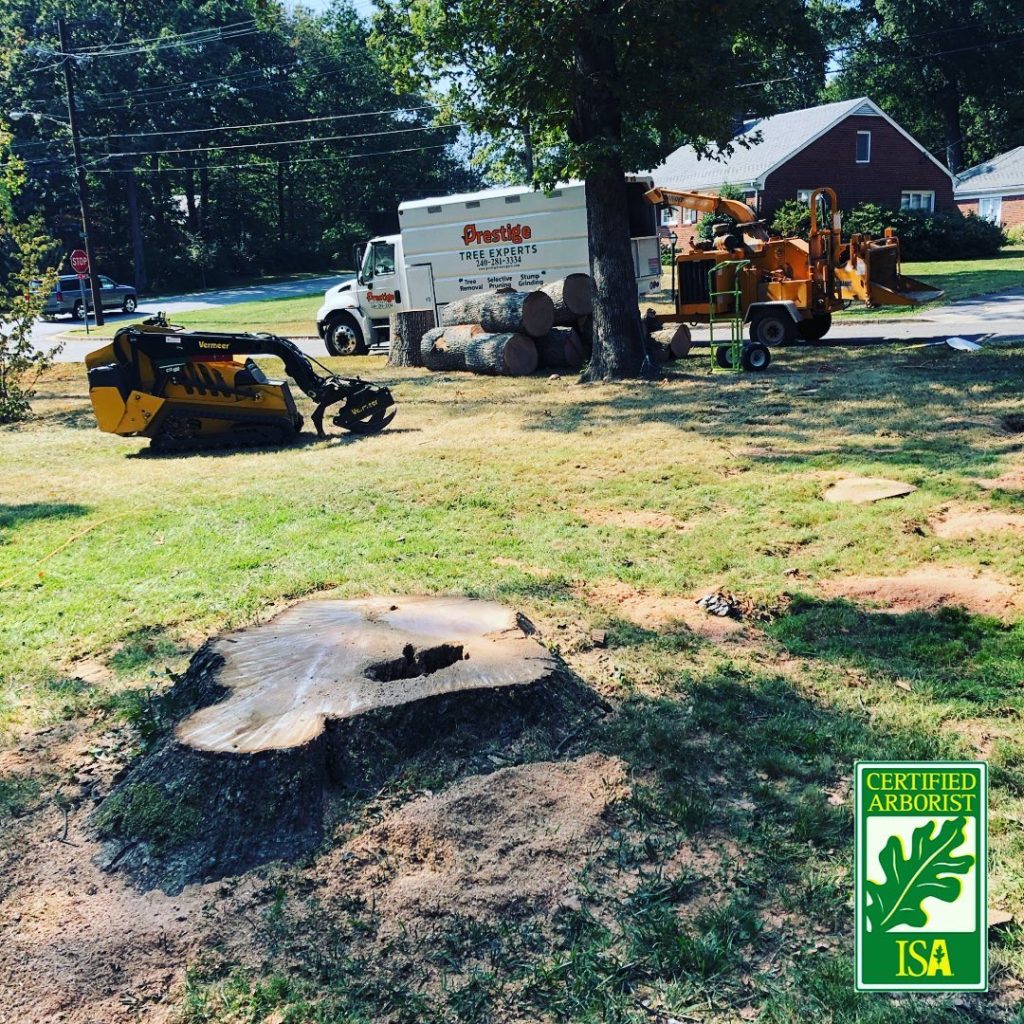
Tree removal is easy to talk about. Tree preservation sounds better.
But real arboriculture is not about what sounds good. It is about what is correct.
Every day, homeowners ask the same question. Should this tree stay or should it go? And the honest answer is, it depends on what is really happening inside that tree.
Because what you see on the outside is only half the story.
The First Step: Understanding Symptoms vs. Signs
Here is where most decisions go sideways.
A yellow leaf, some dieback, maybe a thinning canopy. These are symptoms. They tell us something is wrong, but not what.
Certified arborists are trained to look deeper. We look for signs. Signs point directly to the cause.
Examples include:
- Fungal growth or conks at the base of the tree
- Oozing from cankers on the trunk
- Borer holes or insect activity
- Dark streaking in vascular tissue
Symptoms raise questions. Signs provide answers.
And without the right diagnosis, any decision about tree removal is just guessing.
Integrated Pest Management: The Preservation Mindset
Before we ever recommend tree removal, we look at every possible way to save the tree.
That is where Integrated Pest Management, or IPM, comes in.
IPM is not about spraying first and asking questions later. It is about:
- Identifying the exact problem
- Understanding the life cycle of pests or pathogens
- Using targeted treatments only when necessary
- Reducing environmental impact
The University of Maryland Extension Home and Garden Information Center emphasizes proper diagnosis and responsible management as the foundation of plant health care.
Sometimes the solution is simple. Sometimes it is not. But preservation is always the starting point.
Soil Matters More Than You Think
Here is something most homeowners never consider.
The problem might not be in the tree. It might be underground.
Compacted soil, poor drainage, and buried root flares can lead to:
- Root decline
- Reduced oxygen availability
- Increased susceptibility to disease
- Chronic stress symptoms like chlorosis and dieback
This is where air spading changes everything.
Air Spading and Soil Remediation
Air spading uses compressed air to safely expose root systems without damaging them.
It allows us to:
- Identify girdling roots
- Relieve soil compaction
- Restore proper root flare exposure
- Improve oxygen and nutrient uptake
In many cases, what looks like a failing tree is actually a suffocating root system.
Fix the soil, and you can save the tree.
Chemical Treatments vs. Tree Removal
There is a point where treatment is effective. And there is a point where it is not.
Chemical treatments, including micro-injections and targeted sprays, can:
- Manage certain pests and diseases
- Improve nutrient deficiencies
- Slow disease progression
But they are not magic.
If a tree has:
- Advanced vascular disease
- Extensive internal decay
- Severe root rot
- Structural instability
Then treatment becomes a delay tactic, not a solution.
At that stage, tree removal is not aggressive. It is responsible.
Risk and Liability: The Part No One Likes to Talk About
This is where emotion meets reality.
A declining tree near a home, driveway, or commercial property is not just a plant health issue. It is a liability.
Risk factors include:
- Dead or hanging limbs
- Cracks or structural defects
- Root instability
- Advanced decay
If a tree fails and causes damage, the cost can be significant.
Certified arborists evaluate not just tree health, but also risk.
Because sometimes the question is not “Can we save it?”
The question is, “Should we?”
The Decision Framework Arborists Use
When deciding between preservation and tree removal, we evaluate:
- Health, is the tree declining or recoverable
- Structure, is it stable or hazardous
- Location, what are the targets nearby
- Disease, is it infectious or contained
- Longevity, does it have a future worth investing in
No single factor decides the outcome. It is the combination that matters.
And that is why professional evaluation is critical.
Suggested: Maryland Professional Tree Service: Protecting and Preserving Your Landscape
Frequently Asked Questions
Is tree removal always the best option for a declining tree?
No. Many trees can recover with proper care, soil improvement, and targeted treatment.
How do arborists decide between treatment and removal?
They assess health, structure, disease type, and risk to surrounding property.
Can soil problems really cause tree decline?
Yes. Compacted or poorly drained soil is a leading cause of stress and decline.
Are chemical treatments safe for trees?
When applied correctly and selectively, they are effective and environmentally responsible.
The Reality of Tree Care
Everyone wants to save the tree. Including us.
But great arboriculture is not about avoiding hard decisions. It is about making the right ones.
Sometimes that means restoration. Sometimes that means intervention. And sometimes, it means tree removal to protect everything else around it.
That is the difference between guessing and knowing.
Schedule a Professional Tree Assessment
If you are unsure whether your tree should be preserved or removed, do not rely on guesswork.
Our certified arborists provide expert evaluations and clear recommendations based on science, safety, and long-term landscape health.
Call Prestige Tree Experts at 240.281.3334 or visit https://prestigetreeexperts.com/ to schedule your consultation today.