Trees are patient. Sometimes too patient.
They can stand there for years, quietly dealing with compacted soil, root injury, drought stress, storm damage, fungal infection, insect pressure, or all of the above. Meanwhile, we walk past them, mow around them, park under them, hang a swing from them, and assume everything is fine because, well, it still has leaves.
Until it doesn’t.
A branch turns brittle. Leaves thin out at the top. One side of the canopy looks tired. Bark sinks, cracks, or peels away. A dead limb appears over the driveway like a bad idea waiting for gravity.
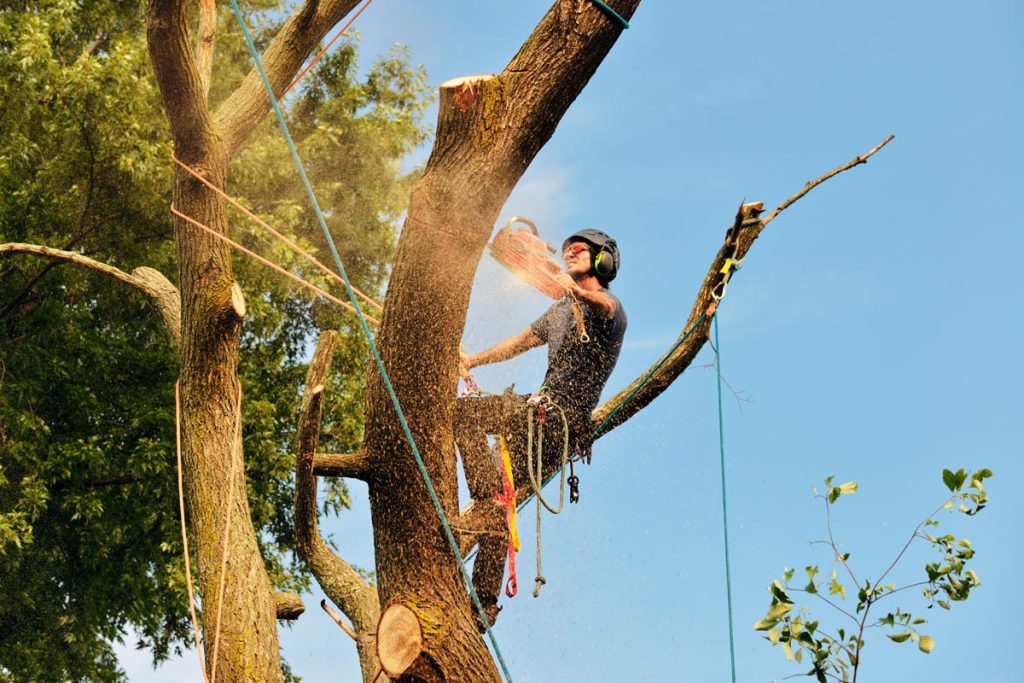
This is where a professional tree removal service becomes more than a convenience. It becomes a safety decision.
Cankers and dieback are not always automatic reasons to remove a tree, but they are warning signs worth taking seriously. The key is knowing when a tree can be managed, when it needs treatment, and when removal is the responsible choice.
What Are Cankers and Dieback?
Before we start sounding the alarm, let’s define the troublemakers.
According to Purdue Extension’s plant diagnostic glossary, a canker is a localized, cracked, or sunken lesion on a branch, stem, or trunk. Cankers can girdle infected plant parts, which can lead to blight or dieback. Purdue Extension explains cankers here.
Dieback is the gradual death of shoots or branches, usually starting at the tips and moving back toward the main stem. It can be caused by fungal pathogens, root rots, winter injury, construction damage, drought stress, or other site problems. Purdue Extension describes dieback as a symptom that often leads to decline.
In plain English?
A canker is like a wound that does not heal correctly.
Dieback is the tree waving a little white flag from the ends of its branches.
And no, the tree is not being dramatic. Trees are terrible at drama. They are excellent at giving slow, subtle warnings we often miss.
When a Tree Removal Service May Be Necessary
Not every canker means the tree has to come down. Not every dead twig is a five-alarm emergency. Trees lose limbs. They compartmentalize wounds. They deal with stress.
Still, there are times when calling a tree removal service is the right move.
Watch for These Warning Signs
A tree with cankers or dieback may need removal if you notice:
- Large dead branches over your home, driveway, sidewalk, or parking area
- Cankers on the main trunk instead of smaller branches
- Dieback affecting a large portion of the canopy
- Fungal conks or mushrooms growing from the trunk or root flare
- Cracks, cavities, or soft wood near the base
- Bark sloughing off in large sections
- Leaning that appears new or has worsened
- Repeated branch failure during normal weather
- Root damage from construction, trenching, or grade changes
- Signs of decline that continue despite proper care
This is where the “wait and see” approach can get expensive.
A dead limb over a lawn is one thing. A dead limb over a roof, playset, car, or walkway is a very different conversation.
Cankers, Dieback, and Tree Risk
Here is the frustrating part. Symptoms can point us in the right direction, but symptoms alone do not always tell the whole story.
Purdue Extension notes that symptoms like wilting can come from multiple causes, including drought, borers, cankers, or root rot. That means a tree may look bad for reasons that are treatable, or it may look “mostly fine” while serious decay is happening internally. Learn more from Purdue Extension’s plant diagnosis glossary.
This is why an arborist evaluation matters.
A certified arborist or licensed tree expert can look at:
- The location of the canker
- The amount of canopy affected by dieback
- The tree species
- Soil and root conditions
- Nearby targets, such as houses, utilities, roads, and people
- Whether pruning, plant health care, or removal is the safest recommendation
For example, a small canker on a removable branch may be handled with proper pruning. A major canker on the trunk of a large shade tree near a patio may require a much more serious decision.
Especially in developed areas of Maryland, trees are often dealing with more than one stress factor. Compacted soil, construction damage, drought, drainage changes, pests, and diseases can stack up like a bad Monday morning.
One issue is stressful.
Five issues are a committee meeting no tree wanted to attend.
Tree Removal Service vs. Tree Pruning
This is the question homeowners often ask first.
“Can we just prune it?”
Sometimes, yes.
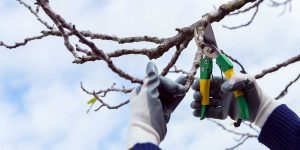
Pruning may be appropriate when dieback is limited, the tree is structurally sound, and the problem is isolated to smaller branches. Removing deadwood can reduce risk, improve appearance, and help the tree allocate resources more efficiently.
A tree removal service may be recommended when the tree has:
- Severe trunk cankers
- Extensive canopy dieback
- Structural instability
- Significant root damage
- Active decay
- A high-risk location
- Advanced decline with little chance of recovery
Think of pruning like editing a rough draft. It can improve what is already working.
Removal is different. Removal is when the whole manuscript has caught fire and is leaning toward the garage.
Not ideal, but sometimes necessary.
Local Example: Maryland Trees Under Stress
In areas near the Patuxent Research Refuge and throughout Howard, Montgomery, Anne Arundel, Prince George’s, and Baltimore Counties, Maryland trees face a mix of urban and suburban stress. Soil compaction, storm damage, construction activity, drainage changes, and pest pressure can all contribute to decline.
Oaks, maples, beeches, cherries, dogwoods, and pines can each show stress differently. Some develop visible cankers. Others show thinning canopies, scorch, premature leaf drop, dead limbs, or fungal fruiting bodies.
The tree is telling a story.
The trick is finding someone who can read it before the ending gets expensive.
What Happens During a Professional Evaluation?
A reputable tree care company should not rush straight to removal without looking at the whole situation.
During an evaluation, the arborist may inspect:
- Canopy density and branch dieback
- Trunk wounds, cankers, cracks, or cavities
- Root flare visibility
- Soil compaction and drainage
- Fungal conks or other signs of decay
- Insect activity, boring holes, or frass
- Surrounding targets and access
- Whether the tree can be safely pruned or treated
Prestige Tree Experts also offers advanced diagnostic and plant health services, including air spading, soil evaluation, and treatment options when appropriate. Air spading can help inspect the root flare and relieve compacted soil without the damage caused by traditional digging.
Sometimes the best recommendation is removal.
Sometimes the best recommendation is pruning, soil care, pest management, or monitoring.
The difference matters.
After Removal: Replanting with Purpose
Removing a declining or hazardous tree does not have to be the end of the landscape story.
In fact, it can be the beginning of a healthier one.
The University of Maryland’s native plant guidance notes that native plants are adapted to local conditions, often need fewer chemicals, require less water, and provide food and shelter for wildlife. Explore Maryland native plant guidance from University of Maryland Extension.
After a tree removal, consider replacing it with a Maryland native tree or understory species suited to the site.
Good replacement possibilities may include:
- Eastern redbud for smaller landscapes
- Serviceberry for spring flowers and wildlife value
- River birch for moist areas
- White oak where there is room to grow
- Black gum for excellent fall color
- American holly for evergreen structure
- Sweetbay magnolia for moist, partly sunny sites
The right replacement depends on space, sunlight, soil moisture, drainage, and long-term maintenance goals.
Please do not simply plant whatever looks cute at the garden center.
That is how future problems get adorable little beginnings.
FAQs About Tree Removal Service for Cankers and Dieback
Does dieback always mean a tree needs removal?
No. Minor dieback can sometimes be managed with pruning, improved soil care, watering, or plant health treatments. Severe or spreading dieback should be evaluated by a professional.
Are cankers on trees dangerous?
They can be. Small branch cankers may be pruned out, but trunk cankers or cankers that girdle major limbs can weaken the tree and increase risk.
Can a diseased tree be saved?
Sometimes. It depends on the cause, severity, tree species, site conditions, and how much healthy structure remains. An arborist can recommend treatment, monitoring, pruning, or removal.
When should I call a tree removal service?
Call when you see large dead limbs, trunk cankers, leaning, decay, fungal conks, root damage, or dieback near homes, vehicles, sidewalks, utilities, or gathering areas.
Final Thoughts: Do Not Wait for Gravity to Make the Decision
Trees rarely fail at convenient times.
They do not check your calendar. They do not wait until the car is moved. They do not avoid the new fence because you just paid for it.
Cankers and dieback are early warnings that a tree may be under serious stress. Sometimes the tree can recover with proper care. Sometimes selective pruning is enough. Sometimes a professional tree removal service is the safest, smartest option.
The important thing is not to guess.
Get the tree evaluated before the problem becomes a property damage story, a safety hazard, or an emergency call after a storm.
Call Prestige Tree Experts
Concerned about cankers, dieback, decay, or a tree that just does not look right?
Prestige Tree Experts provides professional tree evaluations, pruning, plant health care, emergency tree care, and tree removal service for residential and commercial properties across Maryland.
Call 240.281.3334 or visit our Contact Page to request a free estimate.
Our certified arborists and experienced tree care team are here to help you make the safest, most responsible decision for your property.