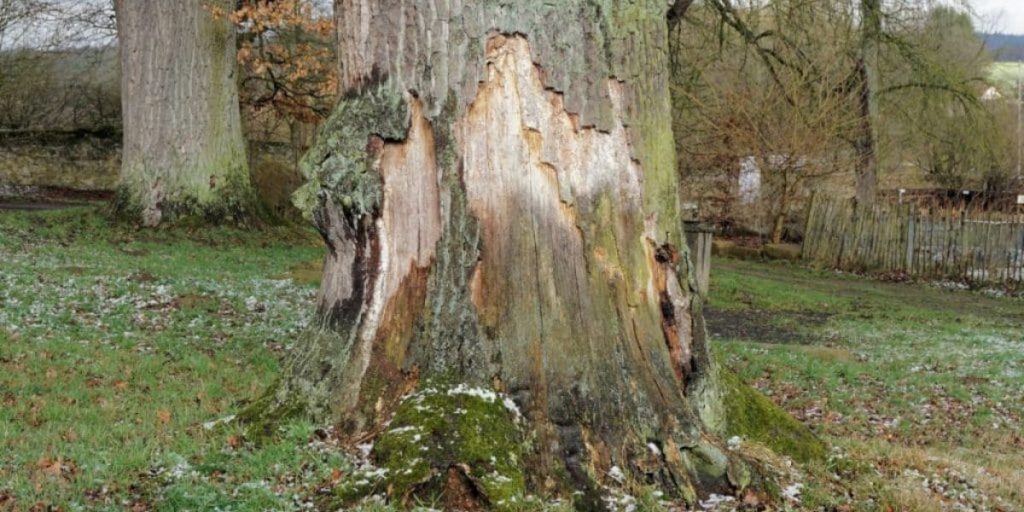
You notice a long split in the bark while walking past a tree in your yard. It may look small at first, but the exposed trunk can still feel concerning. That worry is reasonable because bark protects the tree and supports healthy growth.
When the damage looks unusual, you may start comparing tree services. In this guide, Prestige Tree Experts explains when a split in your tree may warrant closer attention.
What Causes Tree Bark To Crack?
Cracks show up most often on young trees and thin-barked species like maple and fruit trees. Here are the common causes:
- Rapid growth: Young trees and trees soaking up rain after a drought can grow so fast that the bark cannot keep up, splitting along limbs and the trunk.
- Cold weather: Winter cold can make existing bark weaknesses more noticeable, especially on stressed or young trees.
- Sun damage: Exposed bark can become vulnerable during winter, especially on open or recently pruned areas.
- Chemical exposure: Herbicides like glyphosate can weaken bark when they drift onto a tree by mistake.
How Cold and Sun Lead to Bark Splits
Cold stress can damage bark when rapid temperature swings strain the trunk tissue. As that tissue expands and contracts unevenly, pressure can build until the bark opens.
Sunscald injury happens when winter sun warms one side of the trunk for several hours. After sunset, a fast temperature drop can damage that warmed tissue and leave dead patches behind. Those patches may not look serious until spring growth loosens the area, potentially becoming a gateway for common tree diseases.
Keep in mind that shedding bark is not always a warning sign in the same way that a crack might be, because some species renew their outer layers naturally. River birch and sycamore often peel as they grow, especially when the exposed trunk looks healthy.
When Cracks Mean Your Tree Is in Trouble
Healthy trees can often manage minor cracks by forming callus tissue around the damaged area. Ongoing environmental stress from drought or poor drainage often worsens these splits, making the frequency of trimming a vital factor in long-term bark integrity.
Open wounds can lead to pest infestations by providing bark beetles and borers with an easier entry point. Those same cracks can also allow a fungal infection to spread into damaged wood.
Reach out to a professional when you notice any of these signs:
- Bark pulling away to expose bare wood underneath
- Sap oozing from the crack
- Mushrooms or fungal growth on the trunk
- Soft, spongy spots that sound hollow when tapped
How To Help Prevent Future Bark Damage
Keep mulch pulled back so moisture does not collect against the trunk. During long dry periods, deep watering can support stronger growth and help the tree handle seasonal pressure, especially when prioritized alongside improving soil health.
Trust Prestige Tree Experts With Your Tree’s Health
If tree bark cracking concerns you, Prestige Tree Experts can closely assess the tree. Our ISA-certified arborists provide an evaluation based on the tree’s condition. When damage is severe, we can help decide the right time for tree removal. Call us at (240) 281-3334 to book an inspection in Maryland.