
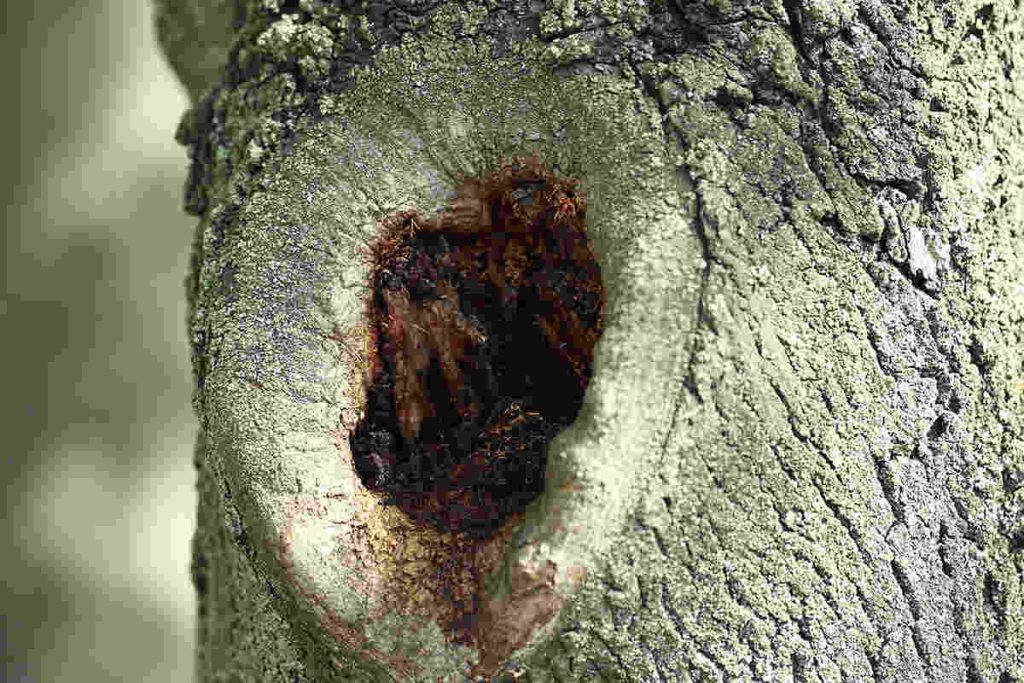
You step outside one morning and notice a large hole in the trunk of a tree you have had for years, and it is easy to worry when the cause is unclear. Before scheduling tree services in Jessup, you may start searching, “What causes large holes in tree trunks?”
In this guide, Prestige Tree Experts will walk you through the most common reasons trees develop these openings and what they mean for the plant’s health and stability.
How Wood Decay Gets Started
Most large openings begin with a small break in the bark. Once moisture reaches the wood beneath the bark, decay can begin even while the tree still looks healthy on the outside. Understanding the causes of tree bark cracks can help identify potential issues before they lead to more serious damage. Storm damage or lawn equipment can create the first wound, and that weakened area may slowly expand as the inner wood breaks down.
The Role of Fungal Infection
Fungi are among the biggest drivers of hollow or damaged trunks. A fungal infection can enter through damaged bark or old branch stubs and slowly break down the wood fibers inside. These infections spread quietly for years before any external hole or structural weakness appears, sometimes contributing to unusual formations such as tree burls.
Understanding the anatomy of a tree helps explain why the inner heartwood can decay significantly while the outer layers still carry nutrients, keeping the canopy looking healthy even as the core hollows out.
Insects and Wildlife Behind the Damage
Once decay has softened the wood, wildlife may come into the picture, enlarging the existing opening. You need to worry about:
- Carpenter ants: They tunnel through wood that has already softened.
- Squirrels: They may turn small openings into nesting spaces.
- Owls and other birds: Cavity-nesting species may use hollow trunks for shelter.
- Raccoons: Larger openings can provide these animals with cover from the weather.
Why Trunk Cavities Can Become Dangerous
Understanding what causes large holes in tree trunks helps explain why decay or old wounds should not be ignored. The trunk relies on solid wood for support, so hollow sections can reduce the tree’s ability to bear its own load.
The size and depth of a cavity affect how much risk it poses. A hole that appears minor on the surface may indicate a more serious structural problem beneath it.
Signs You Shouldn’t Ignore
The following warning signs may mean that the cavity needs prompt attention:
- Mushrooms or shelf-like conks growing on the bark or at the base
- Creaking or cracking noises in the wind, even with mild gusts
- A trunk that appears to lean more than it used to
- Loose or peeling bark around the edges of the hole
Catching these signs early gives you more options for addressing the problem safely.
Get Help With Tree Trunk Cavities
If you are concerned about what causes large holes in tree trunks, Prestige Tree Experts can take a closer look at your property in Jessup, MD. If the tree cannot be restored, our team can explain what to expect during tree removal before any work begins. To discuss a concerning hole in one of your trees, call us at (240) 281-3334.