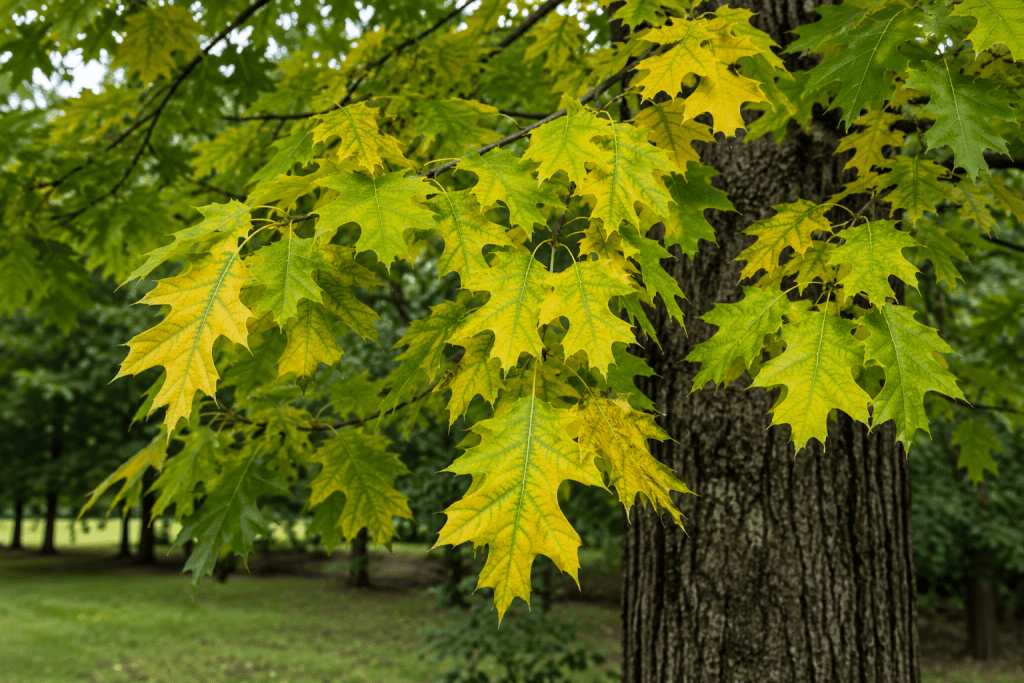
You walk outside with your coffee, look up at your favorite tree, and there it is. Yellow leaves. In May or June.
Excuse me, tree, but it is not fall yet.
If you have noticed tree leaves turning yellow, do not panic. A few yellow leaves here and there can happen. Trees are living things, not perfectly programmed green umbrellas. But when yellowing spreads through the canopy, shows up with dead branches, follows storm damage, or keeps coming back year after year, your tree may be giving you an early warning sign.
Yellow leaves on trees are not just a color problem. They can point to water stress, soil issues, compacted roots, pests, disease, nutrient deficiencies, poor drainage, canopy stress, or even early decline.
In other words, your tree may not be “just having a moment.” It may need help.
For Maryland homeowners, late spring and early summer are prime time for noticing problems. The leaves are fully out, storms are rolling through, temperatures are climbing, and suddenly that maple, oak, dogwood, cherry, or river birch does not look quite right. One side is thinning. A few branches look dead. The leaves are yellow instead of deep green. The whole thing feels a little off.
So, what is your tree trying to tell you?
Let’s walk through seven common reasons tree leaves turn yellow, what you can look for, and when it is time to schedule a professional tree health evaluation.
1. Your Tree Is Getting Too Much or Too Little Water
Trees are surprisingly picky about water.
Too little water, they struggle.
Too much water, they also struggle.
Very relatable, honestly.
During hot, dry stretches, drought stress can cause leaves to yellow, curl, wilt, scorch around the edges, or drop early. You may notice the outer canopy looking thin, or leaves that seem smaller than normal.
But too much water can create a similar problem. If soil stays soggy after heavy rain, roots may not get enough oxygen. Roots need air as much as they need water. When they sit in wet, poorly drained soil, they cannot do their job well.
What you may notice
- Yellowing leaves after a dry spell
- Yellowing leaves after repeated heavy rain
- Leaves wilting even when the soil is wet
- Standing water near the tree
- Early leaf drop
- Thin or weak-looking canopy growth
What to do next
Before watering, check the soil. If it is dry several inches down, your tree may need deep watering. If the soil is already wet, more water is not the answer.
A tree health evaluation can help determine whether your tree is dealing with drought stress, drainage issues, root rot, or another problem hiding below the surface.
2. The Soil Is Making Nutrients Hard to Reach
Sometimes the problem is not that nutrients are missing. Sometimes the tree simply cannot access them.
Soil pH plays a big role in nutrient availability. When the pH is too high or too low for a particular tree species, nutrients like iron or manganese may become unavailable, even if they are technically present in the soil.
This can lead to chlorosis, which is the yellowing or loss of green color in normally green leaves. You may see yellow leaves with green veins, especially on newer growth.
This is where many homeowners reach for fertilizer.
Understandable, but not always helpful.
Fertilizing without knowing what is happening in the soil is a little like ordering random parts for your car because the check engine light came on. Could it help? Maybe. Could it do nothing? Also yes.
What you may notice
- Yellow leaves with green veins
- Pale new growth
- Slow growth
- Leaves that never fully green up
- A tree that looks weaker each year
- Yellowing that appears in the same tree repeatedly
What to do next
Soil testing is the smart first step. It can reveal pH problems, nutrient issues, and other conditions affecting root health.
Prestige Tree Experts can evaluate your tree, review the growing conditions, and recommend the right next step, whether that means soil care, plant health care treatments, improved watering, or root-zone support.
3. Compacted Soil Is Stressing the Roots
This one is sneaky.
Compacted soil does not look dramatic. It does not flash a warning light. It just quietly makes life harder for your tree.
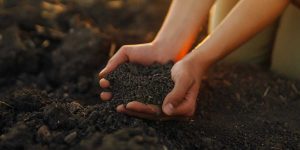
When soil becomes compacted, water and oxygen have a harder time moving through it. Roots cannot breathe properly, and they may struggle to absorb moisture and nutrients.
In Maryland neighborhoods, compacted soil is common around trees near driveways, patios, sidewalks, lawns, construction zones, and areas with regular foot traffic. Even mowing over the same root zone year after year can add stress.
Common causes of compacted soil
- Construction equipment
- Foot traffic
- Parking near trees
- Heavy clay soil
- Lawn equipment
- Recent grading
- Patio, walkway, or driveway installation
Why this causes yellow leaves
When roots are stressed, the canopy often shows it first. You may see yellowing leaves, thinning foliage, smaller leaves, early leaf drop, or branch dieback.
The top of the tree is often telling the story of what is happening underground.
How air spading can help
Air spading uses pressurized air to loosen soil around the root zone without aggressive digging. This allows arborists to inspect roots, identify compaction, expose buried root flare issues, and improve air movement in the soil.
For trees struggling with compacted soil or root stress, air spading can be a valuable part of the diagnosis and recovery plan.
4. The Root Flare Is Buried
The root flare is the part of the tree where the trunk widens at the base and transitions into the major roots. Ideally, you should be able to see it.
If your tree looks like a telephone pole stuck straight into the ground, the root flare may be buried.
This can happen when trees are planted too deeply, soil is added around the base, landscaping changes the grade, or mulch is piled high against the trunk.
And yes, we need to talk about mulch volcanoes.
They may look neat for a minute, but piling mulch against the trunk can trap moisture, invite decay, stress the bark, and hide root problems. Mulch should help the tree, not smother it in a decorative turtleneck.
What you may notice
- No visible flare at the base of the tree
- Mulch piled against the trunk
- Soil covering the lower trunk
- Yellowing leaves
- Thinning canopy
- Bark damage near the base
- Roots circling the trunk
- Decline that seems to happen slowly over time
What to do next
Do not aggressively dig around the trunk with a shovel. Tree roots and bark can be damaged easily.
A professional tree health evaluation can determine whether the root flare is buried and whether air spading, mulch correction, or root-zone care is needed.
5. Pests or Disease Are Affecting Tree Health
Yellowing leaves can also be tied to insects, fungal issues, bacterial problems, or other plant health concerns.
Some pests feed directly on leaves. Others attack branches, trunks, or roots. Some diseases interfere with water movement inside the tree. The result may show up as yellowing foliage, leaf spots, thinning canopy, wilting, dieback, or early leaf drop.
This is where diagnosis matters.
The same yellow leaves could be caused by soil stress, insects, disease, drought, root damage, or several problems happening at once. Trees love a mystery. Unfortunately, homeowners usually do not.
Signs to look for
- Yellow leaves with spots or blotches
- Sticky residue on leaves, decks, cars, or patio furniture
- Black sooty mold
- Chewed or skeletonized leaves
- Webbing
- Fungal growth
- Cankers on branches or trunk
- Sudden dead branches
- Thin or patchy foliage
How plant health care helps
Prestige Tree Experts provides plant health care treatments for pests, diseases, and nutrient deficiencies. Depending on the diagnosis, this may include targeted spray treatments, micro-injections, soil care, monitoring, or other treatment options.
The important word is targeted.
Treating a tree without knowing the cause can waste time and money. Treating the right issue early can help protect the tree and prevent the problem from spreading or worsening.
6. Deadwood, Dieback, or Canopy Stress Is Showing Up
Sometimes yellow leaves are only one part of the picture.
You may also notice dead branches, thinning foliage, weak growth, or a canopy that looks uneven. One side of the tree may look worse than the other. The top may look sparse. Branch tips may be dying back.
This can be a sign of dieback, which means branches or shoots are gradually dying from the tips inward.
Dieback can be caused by drought, root damage, compacted soil, disease, pests, storm injury, construction stress, or long-term decline.
What Maryland homeowners often see
- Dead branches scattered through the canopy
- Yellow leaves on certain limbs
- Thin foliage at the top of the tree
- Branches breaking after storms
- Smaller leaves than usual
- A tree that looks “tired”
- One section declining faster than the rest
When pruning may help
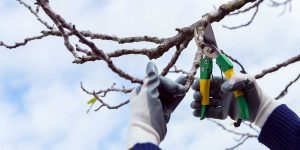
Professional pruning can remove deadwood, reduce risk from weak limbs, improve structure, and support tree health.
But pruning is not always the whole solution.
If the real problem is below ground, such as root stress, soil compaction, poor drainage, or a buried root flare, pruning alone will not fix it. That is why a tree health evaluation should come first.
7. The Tree May Be in Advanced Decline
Nobody likes this part, so let’s be clear.
Tree removal is not the first answer.
Most mature trees are worth evaluating before any major decision is made. A tree with yellowing leaves may still be treatable, especially if the issue is caught early.
That said, some trees are too damaged, too decayed, too structurally compromised, or too far into decline to safely remain.
Advanced decline may involve major canopy loss, trunk decay, root failure, severe storm damage, large dead limbs, fungal conks, cracks, cavities, or a dangerous lean.
Warning signs to take seriously
- Large dead limbs
- A sudden lean
- Cracks in the trunk
- Fungal growth on the trunk or root flare
- Severe storm damage
- Soil lifting near the roots
- Major canopy loss
- Dead branches over a driveway, house, patio, or play area
- A tree that looks worse every season
When removal becomes necessary
Removal may be recommended if the tree is hazardous, structurally unstable, or unlikely to recover.
The goal is not to remove trees unnecessarily. The goal is to protect people, property, and nearby trees while making an honest, informed decision.
Why a Professional Tree Health Evaluation Matters
Yellow leaves are a clue. They are not a full diagnosis.
That is the tricky part.
A tree with yellow leaves could have a water problem, a root problem, a nutrient issue, a pest problem, disease, soil compaction, drainage trouble, or several of these happening together.
A qualified arborist looks at the whole tree and the whole site, including:
- Leaf color and pattern
- Canopy density
- Deadwood and dieback
- Trunk condition
- Root flare visibility
- Soil compaction
- Drainage
- Mulch depth
- Recent construction
- Storm damage
- Pest activity
- Disease symptoms
- Tree species and site conditions
That full picture matters.
Otherwise, you may water a tree that already has soggy roots. Or fertilize a tree with compacted soil. Or prune a tree that really needs root-zone care.
Prestige Tree Experts provides professional tree health evaluations for Maryland homeowners and commercial properties. Our team can identify what is causing the yellowing leaves and recommend the right path forward, whether that means soil testing, air spading, plant health care treatments, pruning, monitoring, or removal only when necessary.
What You Should Do If Your Tree Leaves Are Turning Yellow
If your tree has a few yellow leaves, take a breath. A little seasonal leaf drop can be normal.
But if the yellowing is widespread, sudden, repeated, or showing up with dead branches, thinning canopy, storm damage, pests, or root problems, it is time to take a closer look.
Start with these simple steps
- Look at the entire tree, not just one leaf.
- Check whether the soil is dry, soggy, compacted, or recently disturbed.
- Pull mulch away from the trunk if it is touching the bark.
- Look for dead branches, cracks, mushrooms, holes, sticky residue, or leaf spots.
- Schedule a tree health evaluation before the issue becomes more expensive or harder to correct.
Early diagnosis can often save trees, reduce hazards, and prevent small problems from becoming big ones.
Conclusion: Tree Leaves Turning Yellow Are Worth a Closer Look
When tree leaves turning yellow show up in spring or early summer, your tree may be sending a warning.
It might be water stress. It might be soil pH. It might be compacted soil, buried root flare, pests, disease, canopy stress, storm damage, or early decline.
The best next step is not guessing. It is getting a professional tree health evaluation from a qualified team that understands Maryland tree care.
Noticing yellow leaves, dead branches, or storm damage? Schedule a tree health evaluation with Prestige Tree Experts before the problem gets worse.
FAQs About Yellow Leaves on Trees
Why are my tree leaves turning yellow in spring?
Yellow leaves in spring can be caused by water stress, poor drainage, nutrient issues, compacted soil, pests, disease, or root problems. If yellowing is widespread or paired with dead branches, schedule a tree health evaluation.
Can too much water cause yellow leaves on trees?
Yes. Waterlogged soil can limit oxygen around the roots, which can cause yellowing leaves, wilting, leaf drop, and root stress.
Should I fertilize a tree with yellow leaves?
Not before diagnosis. Yellow leaves may be caused by pH, drainage, compaction, disease, or root damage. Soil testing can help determine whether fertilizer is actually needed.
Can air spading help with yellow leaves?
Air spading can help when compacted soil, buried root flare, or root-zone stress is part of the problem. It allows arborists to inspect and loosen soil around roots without aggressive digging.
When does a yellowing tree need removal?
Removal may be necessary if the tree is hazardous, severely decayed, structurally compromised, or too far into decline. In most cases, a tree health evaluation should come first.