When a tree falls unexpectedly in your neighborhood, you may start to wonder about the large trees near your own home. Even if their leaves look healthy, you might question whether they are safe to stand beneath or park beside. Professional tree services in Jessup can help you assess their condition and identify potential hazards.
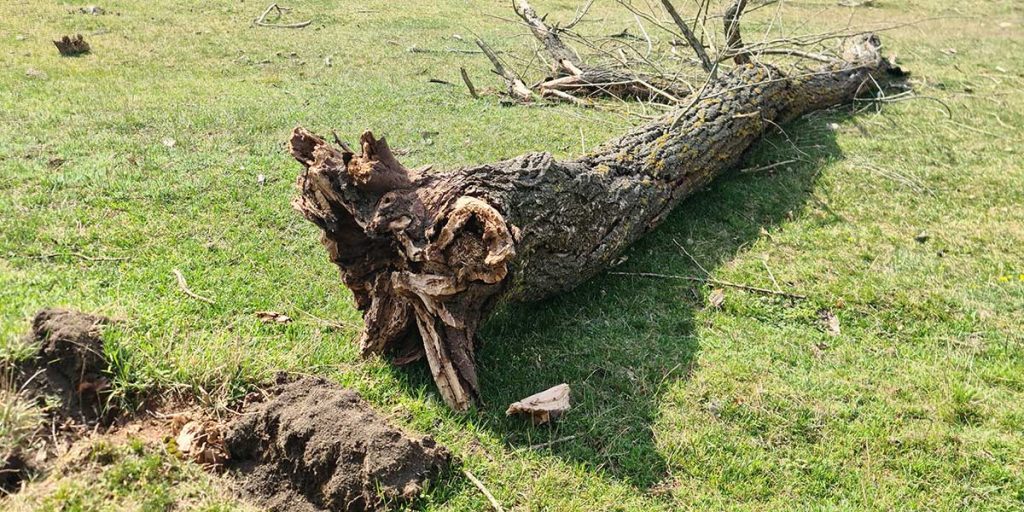
A tree can look full and green while trouble develops out of sight. In this guide, Prestige Tree Experts explains why trees suddenly fall, even when they appear healthy.
What Makes a Healthy-Looking Tree Fail Suddenly?
Healthy foliage does not reveal whether the roots remain firmly anchored or the trunk is structurally sound. Leaf growth and structural stability depend on different parts of the tree.
A tree may continue moving enough water and nutrients to its canopy while the wood supporting its weight weakens. You may see a full canopy without realizing that major roots have been severed or the trunk has lost internal strength.
Root Damage Hidden Below the Surface
Roots anchor a tree, but most remain out of sight. When root damage goes unnoticed, the tree can lose stability even as its leaves look normal. Digging for a patio or driveway can cut through major roots without leaving a mark on the trunk. Utility trenching could inflict similar damage.
Heavy vehicles may also compact the soil, limiting the oxygen available to roots. The remaining root system may collect enough water to support green leaves without anchoring the tree securely. Before digging near a tree, ask an arborist how to protect its roots.
How Soil and Weather Put Trees at Risk
A healthy canopy cannot compensate for unstable soil or weakened anchorage. Why do trees fall so suddenly during ordinary storms? The answer often involves wet ground and wind.
Soil Instability After Heavy Rain
When saturated ground loses its firmness, roots may shift under the tree’s weight. This soil instability can be especially serious in sloped yards or areas with poor drainage.
A tree may remain upright through several rainy days and then tip when wind presses against the canopy. The rain may not damage an otherwise sound tree, but it can expose an existing anchoring problem.
Severe Weather and High Winds
A full canopy catches wind like a sail. During severe weather, that force travels through the trunk and into the roots.
Ice and wet snow also add weight to branches. If the tree has hidden root or trunk damage, the added strain may exceed the strength of the remaining wood.
Hidden Decay Beneath Healthy Bark
A tree does not need to look sick for decay to weaken it. Living tissue near the outside of the trunk can keep carrying water and nutrients while deeper wood gradually loses strength.
Some tree diseases and pest infestations may damage roots or internal wood before the canopy changes. Leaves can therefore remain full and green even when the trunk or major roots can no longer safely support the tree.
Because this decay may remain concealed beneath intact bark or underground, the tree’s failure may be the first noticeable problem.
Sudden Changes in Wind Exposure
Trees adapt to the conditions around them as they grow. Nearby trees and buildings may shield a tree from strong winds for decades.
When neighboring trees are removed, or construction changes the surroundings, that protection can disappear. A healthy-looking tree may then face forces its trunk and roots have not regularly experienced. This new exposure can reveal hidden structural weakness that previously caused no visible problems.
Why Failure Can Occur Years After Damage
Root cutting, soil compaction, and trunk injuries do not always cause immediate changes in a tree’s appearance. Healthy tissue may continue supporting normal growth while decay spreads or anchorage weakens.
As the life cycle of a tree progresses, past damage may remain hidden for years. A storm may appear to bring the tree down suddenly, but it often adds the final strain to an already weakened support system.
Learn What Is Happening Beneath a Healthy Canopy
Green leaves alone cannot confirm that a tree is structurally secure. Hidden damage and changing site conditions both affect whether it remains standing.
Prestige Tree Experts can help you spot a hazard before it falls and recommend the appropriate next step. Our ISA Certified Arborists and Maryland Licensed Tree Experts provide tree removal and tree healthcare you can trust.
If you are concerned about a healthy-looking tree on your property, call Prestige Tree Experts at (240) 281-3334 to schedule a free on-site estimate in Jessup, MD, or the surrounding Howard and Anne Arundel counties.