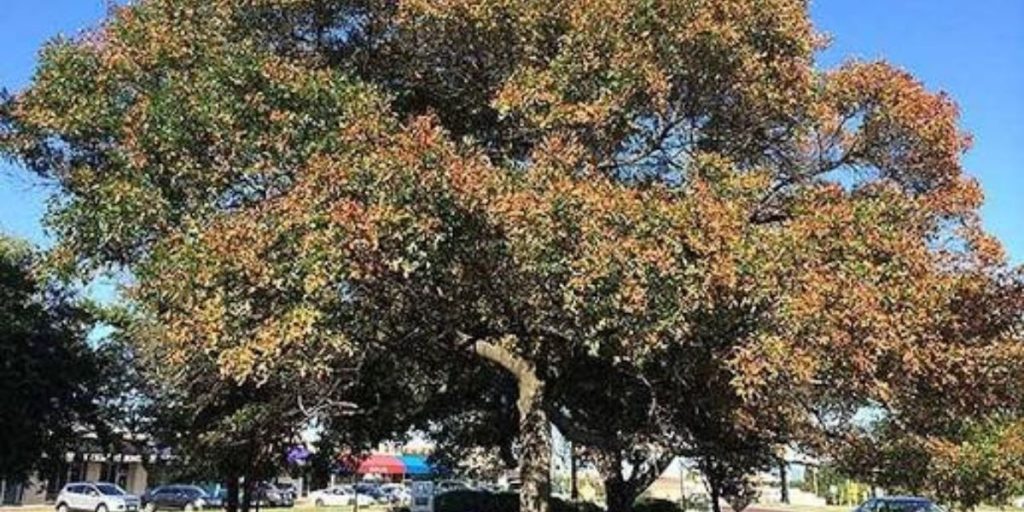
You step outside during late summer and notice something is off with your oak tree. The leaf edges look scorched despite plenty of summer rain, and you struggle to explain what might be causing it.
This browning can be a sign of bacterial leaf scorch in oak trees, a slow-moving disease that affects mature oaks. If you’ve been searching for tree service in Jessup, MD, you’re already headed in the right direction.
In this guide, Prestige Tree Experts will explain what causes this disease and how proper tree health management can support your oak’s health over time.
Understanding Bacterial Leaf Scorch in Maryland Oak Trees
Xylella fastidiosa, the bacterium behind this disease, lives inside the xylem, the tissue that carries water through a tree. As the bacterium multiplies, it clogs these channels and cuts off the water supply, causing the decline you see in the canopy.
Leafhoppers and treehoppers spread the bacteria between trees as they feed, so oak trees can develop bacterial leaf scorch even in healthy-looking yards. Red oaks are especially vulnerable, so knowing the basics of caring for red oak trees helps you notice changes sooner.
Prestige Tree Experts was founded by Laurel natives Matthew Derrick and Adam Bodmer, whose ISA Certified Arborist credentials and TCIA membership help them recognize early signs of this oak tree disease. The company holds Maryland Licensed Tree Expert numbers 2177, 2191, 2388, 2410, and 2418, along with Maryland Department of Agriculture (MDA) registration 32911.
Early Warning Signs and Foliage Symptoms
So, how can you tell if your oak has this problem? Look closely at the leaves; a few distinct clues separate this disease from ordinary heat stress or dry soil.
Watch for the following changes in your oak’s canopy:
- Leaf browning: Brown discoloration appears along the leaf margin in late summer, while the center tissue stays green.
- Leaf margin necrosis: A pale yellow or reddish halo forms between the dead tissue and the healthy tissue.
- Canopy pattern progression: Symptoms first appear on scattered branches in the interior canopy and then spread outward over time.
Any one of these clues is worth a closer look from a professional.
Distinguishing Scorch From Environmental Stress and Oak Wilt
Drought stress tends to affect the entire canopy at once. This disease behaves differently, showing up on isolated branches while the rest of the tree still looks healthy. Oak wilt is another condition worth ruling out, since it causes leaves to drop rapidly and can kill a tree within weeks each spring.
Bacterial leaf scorch moves far more slowly and rarely causes sudden leaf loss. A certified arborist can collect a tissue sample and send it to a lab for analysis to help confirm the presence of the bacteria before developing a treatment plan.
Advanced Tree Healthcare and Therapeutic Interventions
Identifying oak trees showing early signs of bacterial leaf scorch gives certified arborists more treatment options.
Arborists may recommend the following, depending on how far the disease has progressed:
- Air spading: Arborists use compressed air to break up compacted soil and address girdling roots for better water uptake.
- Chemical applications: Arborists use MDA-registered treatments to help manage insect vectors and support disease management.
- Organic soil nutrition: Arborists apply humic acids and slow-release nutrients to strengthen the tree’s natural defenses.
Combining appropriate care methods may help support an infected oak’s health and extend its functional life.
Long-Term Structural Care and Tree Safety Management
When a limb becomes structurally weak due to chronic infection, flexible steel cabling systems can redistribute weight among branches, adding support and reducing the risk of failure during storms.
In cases of severe decline, removal by a Maryland Licensed Tree Expert is the safest option for protecting nearby homes and utility lines. After removal, green waste is cleared and recycled into mulch or other responsible green resources whenever possible.
Protect Your Jessup Oak Trees With Prestige Tree Experts
We know how disheartening it is to watch a mature oak decline, and catching the warning signs early gives trees a fighting chance at recovery. Our team offers treatment plans to support tree health, and when decline has gone too far, we can help you determine the best time to remove a tree. We handle everything from tree healthcare to full removals, with licensed, insured service throughout Howard and Anne Arundel counties.
Our team believes in honest recommendations, transparent written estimates, and helping homeowners make confident decisions about their trees. If you notice these symptoms on your property, call Prestige Tree Experts at (240) 281-3334 to schedule a free evaluation for bacterial leaf scorch affecting oak trees in Jessup and nearby areas.